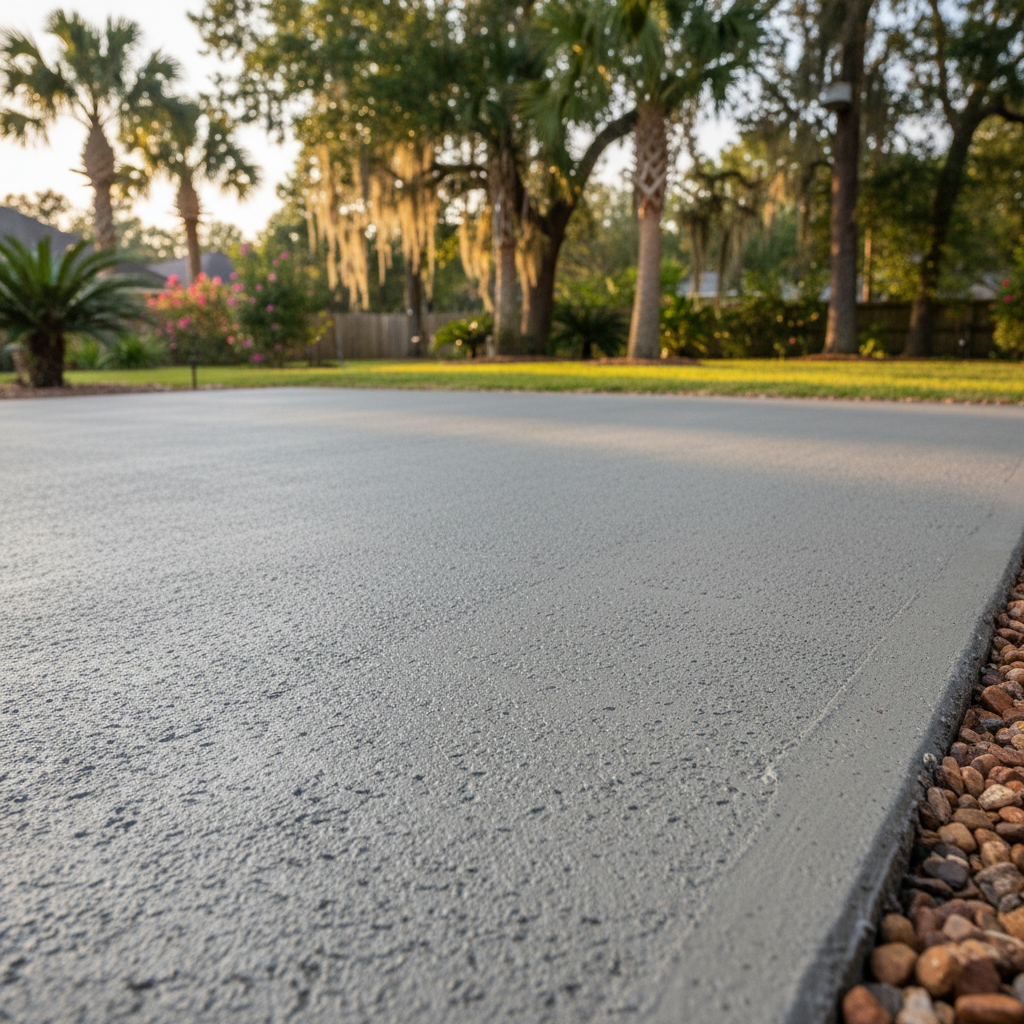
Want to upgrade your backyard with a new concrete patio this season? If you live around Bossier City, you already know our local red clay can cause problems when it comes to keeping flatwork from cracking. Before you start digging up your lawn or calling mixing trucks, let us walk through what goes into a Concrete Patio build, what you can tackle yourself, and where trying a shortcut will cost you down the road.
Before the Pour: Planning and Prep Work
Getting ready for a Concrete Patio is ninety percent about what happens under the ground, not on top of it. Bossier City yards get affected by heavy spring downpours and baking summer droughts, meaning the underlying soil swells and shrinks constantly. If you skip proper base preparation, your brand-new Concrete Patio slab will not last three seasons without shifting.
Here is what you can do yourself in the planning phase:
- Mark out the shape with stakes and mason's string to check clearances against your property lines and back door.
- Call 811 to get your underground utility lines marked before touching a shovel.
- Plan your drainage slope so water flows cleanly away from your house foundation instead of pooling near the walls.
When it comes to digging out the soft topsoil, hauling away dirt, and laying down a thick, compacted gravel base, that is heavy labor. Elite Concrete spends hours grading and packing that sub-base because shifting soil requires a solid foundation to stay put. If you do not have access to a plate compactor and a skid steer, this is a milestone to hand off to a professional concrete contractor.
During the Project: Forms, Pouring, and Finishing
Once the base is packed tight, you are building wooden forms, tying steel rebar grids, and ordering the concrete truck for your Concrete Patio. This phase moves fast, and concrete does not wait for anyone once it starts setting up in the summer heat.
Building straight wooden forms and driving stakes is straightforward if you are handy with a circular saw and a level. But placing steel reinforcement and screeding a large wet Concrete Patio slab flat takes a practiced touch. If your Concrete Patio is small—say, a simple square pad for a grill—a couple of motivated friends and some bags from the local hardware store might work. But for anything over a few hundred square feet, you need a full crew.
A ready-mix truck shows up with several yards of concrete that will start setting within an hour. If you fall behind while screeding, edging, and applying a slip-resistant broom finish on the Concrete Patio, you will end up with a rough, wavy surface that holds puddles. Timing matters tremendously here, especially when the humidity climbs in North Louisiana.
After the Pour: Curing and Sealing
The truck leaves, the finish looks great, and you might think the job is finished. Not quite. Concrete does not dry—it cures through a chemical reaction that needs moisture and time.
You can handle the post-pour maintenance yourself:
- Keep the fresh Concrete Patio damp by gently spraying it down with a hose for the first few days to maximize its strength.
- Wait at least a week before putting heavy patio furniture or a grill on the surface.
- Roll on a quality penetrating sealer once the Concrete Patio has fully cured to protect against weather and stains.
Taking care of these final steps ensures your Concrete Patio handles the elements without pitting or flaking. Whether you decide to handle the site layout yourself or bring in Elite Concrete to turn your backyard blueprint into reality, getting the foundation right from day one is the secret to a Concrete Patio you will enjoy for 15 to 20 years or more.